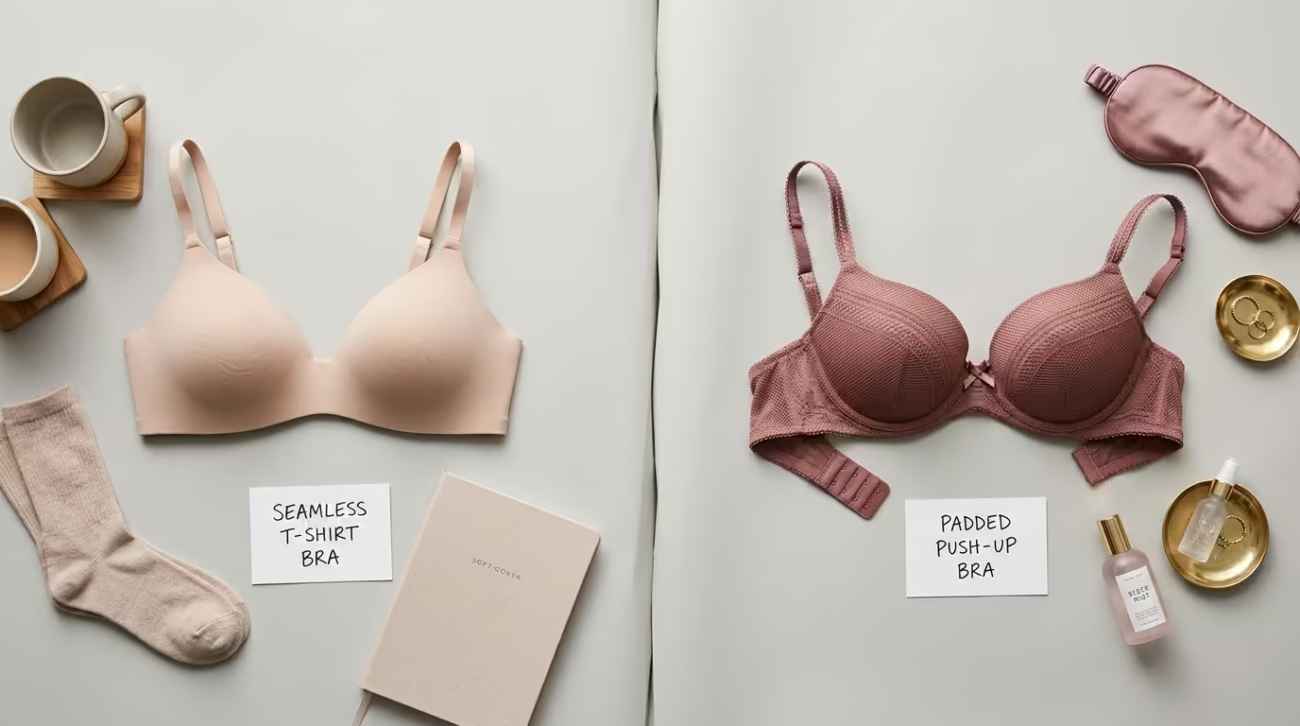

Here is an uncomfortable truth that fitters in Dubai and Riyadh repeat constantly: the vast majority of women are wearing the wrong bra size. Research on bra fit, including the cross-sectional study on optimising breast support through correct bra fit (McGhee & Steele, Journal of Science and Medicine in Sport) and the 3-D body-scan analysis of physical characteristics related to bra fit, found that most bras in daily use fail basic fit assessments. The good news: a badly fitting bra announces itself through clear symptoms, and every symptom has a specific fix.
This checklist covers the eight most common signs — from a band that rides up to straps that dig in — and tells you exactly what to change. If you need to remeasure from scratch afterwards, our sister sizes explained guide shows how to find alternative sizes when your exact one is sold out.
Sign 1: The Band Rides Up Your Back
If the back of your bra climbs toward your shoulder blades, the band is too loose. The band should provide most of the support and must sit level all the way around. Fix: go down one band size and up one cup size if needed (a sister size), or tighten to a firmer hook setting if the bra is new. If it rides up in every bra you own, your band size is simply too big.
Sign 2: The Straps Dig Into Your Shoulders
Red grooves or aching shoulders mean the straps are carrying weight that the band should carry. Fix: loosen the straps first — you should be able to slide two fingers under each strap. If loosening makes the cups gape, the band is too loose; go down a band size. Wide, padded straps also help distribute weight.
Sign 3: The Cups Gape or Wrinkle at the Top
Empty space at the top of the cup means the cup is too large — or the band is too loose, letting the cups tilt away from the body. Fix: try one cup size down, or down a band size with the same cup volume. After putting on a bra, always “scoop and swoop”: lean forward and gather all breast tissue into the cup.
Sign 4: Breast Tissue Spills Out of the Cups
Bulging at the top, sides or under the arms means the cups are too small. Fix: go up one or two cup sizes while keeping the band the same, or up a cup and down a band (sister size) if the band already feels snug. Never settle for spillage — it causes soreness and an unflattering line under clothes.
Sign 5: The Underwire Pokes or Sits on Breast Tissue
A wire that digs at the sternum, armpit or breast tissue is usually a cup-size problem, not a wire problem. Fix: the wire should trace your breast root exactly, sitting in the crease under the bust, never on soft tissue. If it pokes after washing, the casing may be worn — replace the bra. If it always sits on tissue, size up the cup.

Sign 6: The Center Gore Floats Away From Your Chest
The little bridge between the cups should lie flat against your sternum. If it floats, the cups are too small or the band too loose, and the bra cannot anchor properly. Fix: size up the cup, or down the band with up a cup. A floating gore also reduces support dramatically.
Sign 7: The Straps Fall Off Your Shoulders
Slipping straps usually mean the band is too wide and riding high, pushing the strap anchors outward — or the straps are set too wide. Fix: tighten the band (smaller band size), move the strap anchors closer together toward the center of the cups, or choose a racerback style that locks straps in place.
Sign 8: You Feel Tired, Achy or Self-Conscious by Mid-Afternoon
General discomfort — upper back ache, neck tension, a constant urge to adjust — is the cumulative symptom of the seven signs above. Fix: run the 60-second check below, remeasure at home, and replace worn elastic. Support research consistently links poor bra fit to pain and discomfort, so treat persistent ache as a fitting problem, not something to endure.

The 60-Second Fit Check
- Band: level at the back, snug, two fingers underneath with slight resistance.
- Cups: fully filled after a scoop and swoop, no gaping, no spillage.
- Gore: flat against the sternum.
- Wire: tracing the breast root, never on tissue.
- Straps: two fingers underneath, no digging, no slipping.
- Movement test: raise your arms — the band should not ride up more than a couple of centimetres.

When It Is Wear, Not Size
Sometimes the bra fits but has simply aged: elastic loses stretch, cups lose shape, wires fatigue. If the band feels loose only in your oldest bras, that is wear, not a size change. Rotate bras, wash gently, and retire them at the first sign of breakdown.
How Often Should You Re-Check Your Bra Fit?
Bodies change — weight fluctuates, hormones shift, postpartum changes alter both band and cup, and even a few kilograms can move you a full size. Fit experts recommend re-measuring every 6 to 12 months, and always after pregnancy, significant weight change, or if you notice any of the eight signs above. In the GCC, seasonal wardrobe changes (summer linens vs winter layers) are also a good reminder to check that your bra still matches your body underneath. Keep a tape measure at home; it takes two minutes and prevents months of discomfort.
Building a Fitting Routine at Home
Turn the 60-second check into a habit: once a month, run through band, cups, gore, wire and straps on each bra you own, and retire anything that fails. Wash bras in a lingerie bag, air-dry them, and store them so cups keep their shape — these small habits keep every bra fitting like new. If a bra passes the check but still feels wrong after a full day, trust your body: replace it or re-size. Comfort is the benchmark, not the label.
When to Get a Professional Fitting
If you have run the checklist, remeasured at home, and still cannot get comfortable — or if you have a larger bust, recent surgery, pregnancy changes or persistent pain — a professional fitting is worth it. A fitter can assess breast shape, root width and tissue distribution in person, which changes which styles suit you. Research on bra fit consistently shows that professional assessment dramatically improves fit outcomes compared with self-sizing alone (body-scan study on physical characteristics and bra fit). Many reputable boutiques in Dubai, Riyadh and Jeddah offer free fittings; bring two of your current bras so the fitter can see what is failing.
Fit Signs Specific to Wireless and Sports Bras
Wireless bras fail differently: with no wire, the band must be snugger, so a riding band almost always means a too-large band size, and cups that slide out at the bottom usually mean the band is loose. Sports bras should feel snugger than everyday bras — you should not be able to lift the band more than a couple of centimetres, and the cups should fully contain the bust during a jump test. If a sports bra passes the jump test but the straps rub, adjust strap width and length before assuming the bra is wrong; chafing is usually a strap-setup issue, not a cup issue.
How Fit Affects Confidence and Posture
Clothing psychology research and everyday experience agree: when your foundation layer fits, everything on top sits better and you stand taller. A bra that rides up or digs in creates a low-grade stress you feel all day — you adjust, hunch and fidget without noticing. A correctly fitted bra removes that background noise: shoulders back, clothes draping as designed, and a quiet confidence that shows in how you carry yourself at work and at events. If you catch yourself tugging at your bra or avoiding certain outfits, that is your fit talking. Run the checklist, fix the band and cup, and let the right fit do its quiet work.
For a full re-measure — band, cup, sister sizes and a UAE size chart — follow our UAE bra size measuring guide, then shop sizes XS to 3XL with confidence.
Frequently Asked Questions
How do I know if my bra fits properly?
Run the 60-second check: level snug band, full cups after scooping, flat gore, straps with two fingers of room, and no ride-up when you raise your arms. If all five pass, the fit is right.
Is it normal for bra straps to leave red marks?
Faint marks that fade within minutes are normal; deep, painful grooves mean the straps are too tight or the band is too loose and the straps are doing the band’s job. Loosen straps and check the band size.
Why does my bra ride up at the back?
Almost always because the band is too big. The band should sit level under your shoulder blades. Go down a band size (and up a cup if needed) or use a tighter hook row on a new bra.
What does cup gaping mean?
Gaping at the top of the cup means the cup is too big or the band too loose. Try a smaller cup, and remember to scoop and swoop all tissue into the cup when putting the bra on.
Can a bra be too small even if the band feels fine?
Yes — spillage at the top or sides with a comfortable band means the cups are too small. Go up a cup size while keeping the band, or use a sister size if the band is already snug.
How tight should a new bra be?
Snug enough that two fingers slide under the band with slight resistance, on the loosest hooks. As the elastic stretches over weeks, move to tighter hooks; a bra should never start on the tightest setting.
Why does my underwire poke me?
Usually the cup is too small so the wire sits on breast tissue, or the casing is worn and the wire is escaping. Size up the cup, or replace the bra if the wire is poking through the fabric.
My bra fits but I still get back pain — what now?
Re-check band size and cup containment first, consider wider straps and a wider band, and if pain persists, speak to a doctor or physiotherapist. A well-fitted supportive bra helps, but it is not a medical treatment.
Conclusion
Eight signs — riding band, digging straps, gaping or spilling cups, poking wires, floating gore, slipping straps and afternoon ache — all point to the same root causes: wrong band, wrong cup, or worn-out elastic. Fix the band first, then the cup, then re-check with the 60-second test.
A bra that passes the checklist will feel invisible by lunchtime. Remeasure, replace what has worn out, and enjoy the difference a correct fit makes every single day.