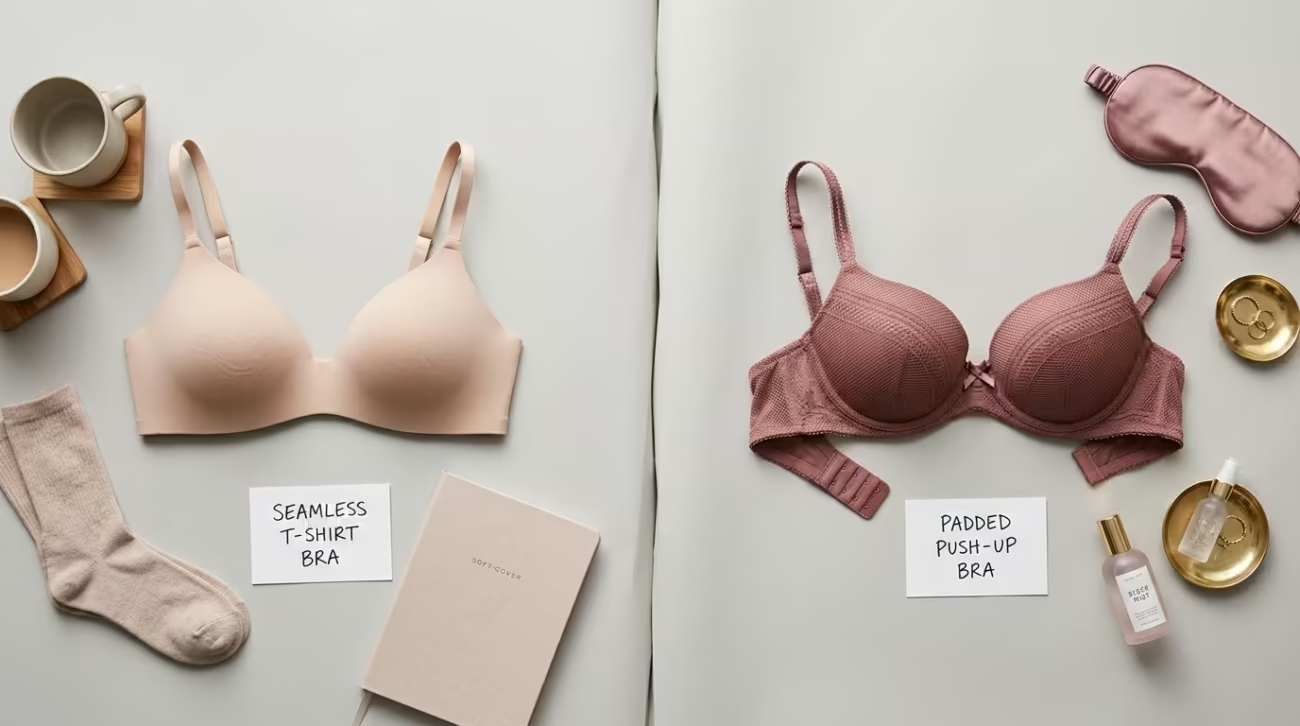

Some bras are designed for a look; a full coverage bra is designed for a living. It wraps the bust from the ribcage to above the nipple line, anchors with a wide band, and supports from the sides as well as underneath. For women in the UAE and Saudi Arabia who spend long days at work, at school runs, or in the heat moving between air-conditioned spaces, that all-day containment is the difference between a bra you forget and one you count down the hours in.
This guide explains what makes a full coverage bra different, who it suits, how it compares with demi and balconette styles, and how to check the fit. If something feels off with your current bras, start with our 8 signs your bra doesn’t fit checklist before buying anything new.
What Is a Full Coverage Bra?
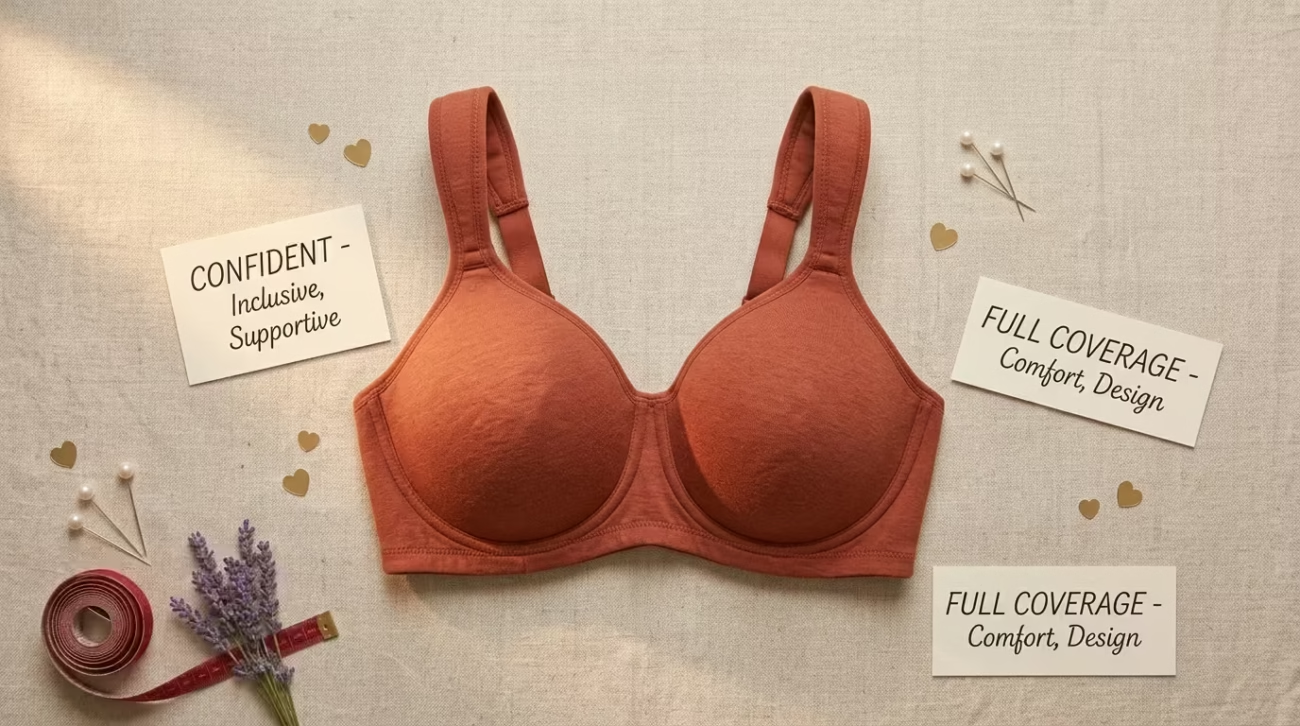
A full coverage (or full cup) bra has tall cups that contain the entire bust, usually extending up to the collarbone area, plus side panels that bring tissue forward instead of letting it drift toward the armpits. The band is typically wider with two or three rows of hooks, and the straps are set wider apart. The overall effect is maximum containment, minimal bounce, and a smooth rounded shape under clothes.
Anatomy of a Full Coverage Bra
- Tall cups: encapsulating cups that fully contain the bust, often with a stretch-lace upper section that adapts to volume changes during the day.
- Side support panels: firm wings at the sides that centre the bust and improve posture.
- Wide band: distributes weight across the ribcage so the straps never have to carry it alone.
- Center gore: the piece between the cups; in a good fit it lies flat against the sternum.
- Underwire channel (optional): many full coverage bras are underwired for shape; wireless versions with firm bands are a comfortable alternative, especially in hot weather.

Full Coverage vs Demi vs Balconette
| Style | Cup height | Support level | Best for |
|---|---|---|---|
| Full coverage | High — contains the whole bust | Highest | Everyday, large busts, workwear, thin fabrics |
| Demi | Half — cuts across the middle of the bust | Moderate | Low-cut tops, smaller busts, variety |
| Balconette | Low — horizontal line across the bust | Moderate with wide straps | Square/strapless necklines, lift and shape |
Who Full Coverage Suits
Full coverage bras are the best friend of fuller busts (D cup and above), where containment prevents spillage, back ache and the shirt-pulling problem. They are also ideal under thin or clingy fabrics, under work uniforms, and for anyone who wants one reliable bra for eight-plus-hour days. Smaller busts can wear them too — the extra coverage simply looks neat under blouses and prevents nipple show in strong air conditioning.
Correct fit is what makes any bra — including full coverage — feel supportive rather than restrictive. Studies on bra fit, such as the research on optimising breast support through correct bra fit by McGhee and Steele, consistently find that most women wear the wrong size, usually a band that is too big and cups that are too small — the opposite of what feels intuitive.

Full Coverage for Large Busts
If you are a DD cup or larger, look for full coverage bras with at least a 3-hook wide band, wide padded straps, side support panels and full encapsulation cups (each breast in its own cup, not compressed together). These features spread weight across the torso, which is the single biggest factor in all-day comfort and back pain prevention. In the GCC, where many women wear layered modest outfits, a full coverage bra also gives a smooth silhouette under abayas and blazers.
Wireless Full Coverage Options
Not everyone wants underwire. Modern wireless full coverage bras use a firm, wide band with internal support slings and structured cups to deliver similar containment. They are popular in the Gulf summer, for sensitive skin, and for anyone who finds wires poke through after a few washes. If you try wireless, make sure the band is snug — it is doing all the work.
The Full Coverage Fit Checklist
- The band sits level all the way around the back and feels snug — two fingers should slide underneath with slight resistance.
- You can run a finger flat under the band at the back without it lifting away.
- The cups contain all breast tissue: no bulging at the top, sides or under the arm.
- The center gore lies flat against your sternum; if it floats, the cups are too small.
- The underwire (if present) follows your breast root and never sits on breast tissue or pokes at the armpit.
- Straps rest on the shoulders without digging, and loosening them does not change cup fit — proof the band is right.
- When you raise your arms, the band stays put and the cups do not gape.

Styling Full Coverage Bras
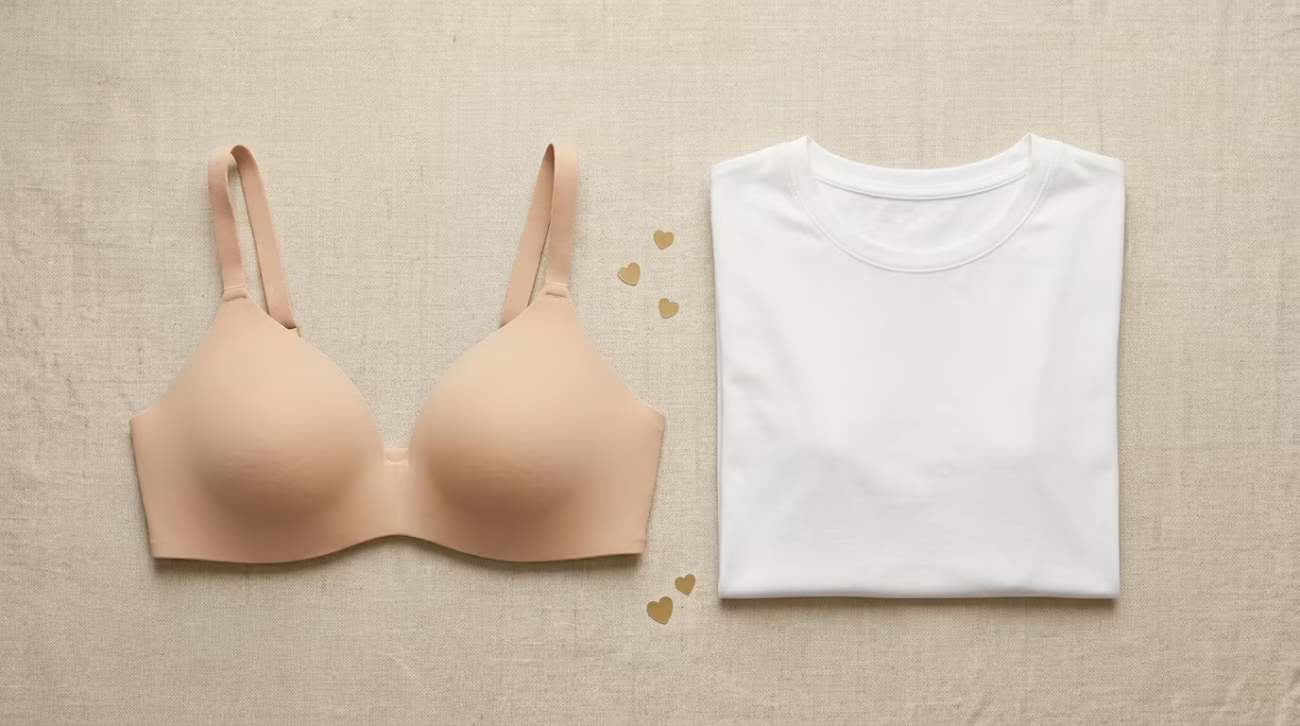
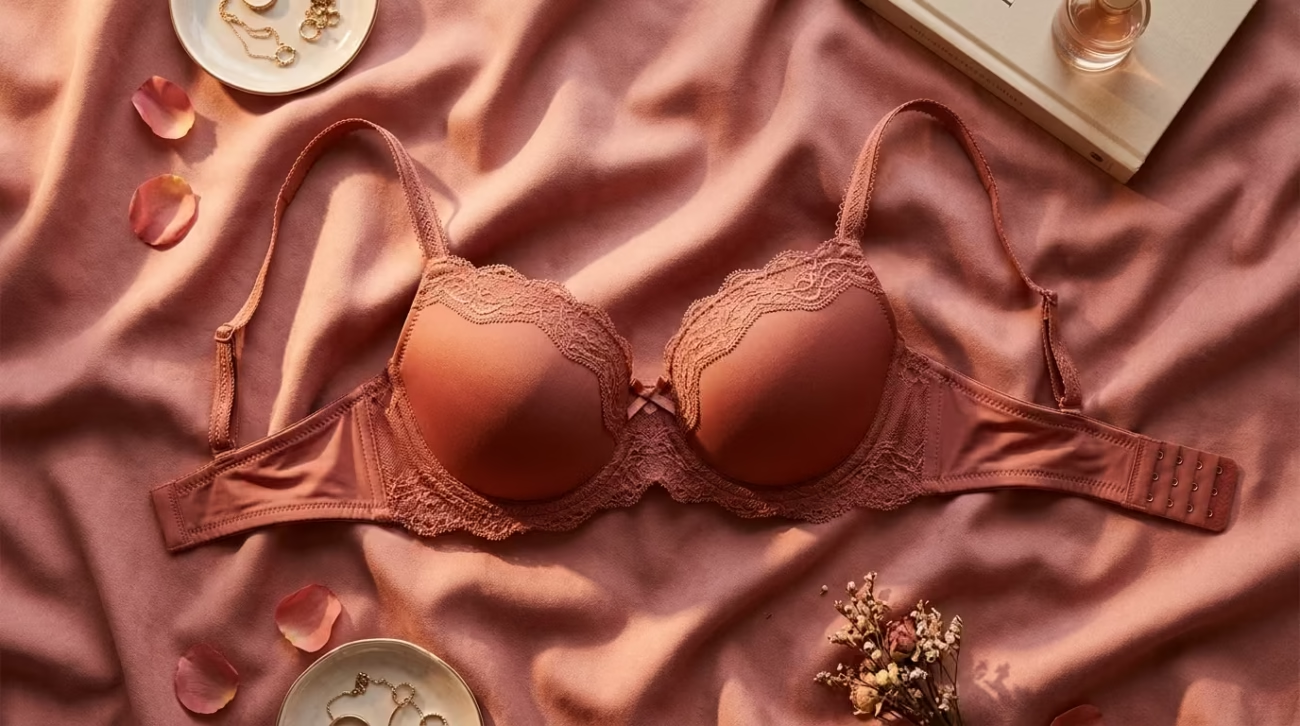
In neutral tones — nude, ivory, black, soft beige — a full coverage bra disappears under everything from white office shirts to thin knit dresses. Lace-trimmed full coverage styles add a feminine detail for V-necks while keeping coverage. For modest dressing, a full coverage bra under a fitted abaya or blazer gives a polished line with zero show-through in strong AC.
Care for Long-Lasting Support
Hand-wash or use a lingerie bag on a gentle cold cycle, fasten the hooks before washing, and always air-dry — dryer heat destroys elastic and moulded cups. Rotate between two full coverage bras so each gets a rest day, and replace when the band stretches or the wires fatigue, typically every 6–12 months of regular wear.
Full Coverage Bras Under Abayas and Workwear in the GCC
In the UAE and Saudi Arabia, much of daily dressing is about the silhouette of the outer layer. A full coverage bra in nude is the invisible foundation of a well-draped abaya: it contains the bust completely so the fabric falls in a clean line from the shoulders, with no bumps at the chest or visible bra edges at the neckline or arms. The same principle applies to blazers, uniforms and fitted dresses — the better the foundation, the more polished everything on top looks.
For modest dressing, full coverage bras with a higher gore and lace-trimmed or smooth cups also give modesty without bulk. Many women keep two or three full coverage bras specifically for work and abaya days, and rotate them so the elastic always recovers overnight.
Getting the Best Fit When Shopping Online
Since you cannot try on in-store, measure at home first: snug underbust for the band, overbust for the cup, and round the band to the nearest 5 cm. Compare against the store’s chart in both cm and inches, and read reviews mentioning fit — especially notes like “band runs small” or “cups run large”, which are common and valuable. Order two adjacent cup sizes if you are between, keep tags on, try with a scoop and swoop, and return the one that does not pass the checklist. Buying online with free returns makes finding your perfect full coverage bra much easier than ever.
Full Coverage Bras During Pregnancy and Postpartum
Pregnancy changes both band and cup, often several times, and a full coverage bra is one of the most comfortable styles through every stage because its tall cups contain fluctuating volume and its wide band supports a changing ribcage. Choose soft, wireless full coverage styles with stretch lace upper cups during pregnancy, and re-measure each trimester. Postpartum, the same style eases the transition back — many women keep one or two full coverage bras a size up for the early weeks. If you breastfeed, look for full coverage nursing bras with clip-down cups so support and access work together.
Mixing Full Coverage With Your Other Bras
You do not wear one style all day every day, and you do not need to. A practical rotation: full coverage bras for work, fitted outfits and long days; a t-shirt or wireless bra for casual days; a sports bra for exercise; and an occasion bra (balconette, plunge or strapless) for special necklines. Full coverage earns its place as the most-worn style because it is the most versatile under everyday clothing — but the others each handle the moments it cannot. Own two or three of each type and rotate so everything lasts.
Full Coverage, Breast Awareness and Self-Checks
A well-fitted full coverage bra is also a practical aid to breast awareness: because the cups contain the bust evenly, you notice changes more easily when you put it on each morning. Know your normal look and feel, and check monthly in front of a mirror with arms raised and lowered, as recommended by health services such as the NHS breast cancer pages. Any new lump, skin change, nipple change or persistent pain should be checked by a doctor promptly — most changes are benign, but early assessment matters. A bra should never cause pain; persistent pain on one side is a reason to see a professional, not to tighten the straps.
Ready to shop? Explore the everyday bra collection in sizes XS to 3XL, with delivery across the UAE, Saudi Arabia and the GCC.
Frequently Asked Questions
What is a full coverage bra?
A bra with tall cups that contain the entire bust, plus a wide band and side support — designed for maximum containment and all-day support rather than a particular neckline.
Are full coverage bras good for large breasts?
Yes — they are often the most comfortable option for DD+ cups because the wide band and side panels distribute weight evenly across the ribcage.
Are full coverage bras comfortable for small busts?
Yes. Smaller busts get a neat, smooth shape under blouses and protection from show-through in cold air conditioning; just make sure the cups are not gaping, which means the size is too big.
Full coverage bra vs demi bra — what is the difference?
A demi cup covers about half the bust and suits low necklines; a full coverage bra contains the whole bust for maximum support and a smooth line under fitted or thin clothing.
Can I wear a full coverage bra under a low-cut dress?
Technically yes, but the tall cups will show. For low necklines, switch to a plunge or balconette style; keep full coverage for high necklines, workwear and everyday wear.
Are wireless full coverage bras supportive enough?
Modern wireless full coverage bras with wide, firm bands are supportive for most sizes. For very large busts or high-impact days, an underwired full coverage bra or a sports bra is the safer choice.
How often should I replace a full coverage bra?
With rotation and gentle washing, expect 6–12 months of regular wear. Replace sooner if the band rides up, the cups wrinkle, or the underwire pokes through the channel.
Do full coverage bras make you look bigger?
No — they create a smooth, rounded, contained silhouette. If you want a flatter profile under shirts, that is specifically what a minimizer bra does; full coverage maximises support and coverage.
Conclusion
A full coverage bra is the reliable workhorse of any lingerie drawer: maximum containment, wide-band support and a smooth line under workwear, abayas and thin fabrics. Get the band size right, check the gore and side panels, and it will carry you comfortably from morning meetings to evening plans.
Measure at home, choose your size in neutral tones, and make the full coverage bra the one you reach for without thinking.