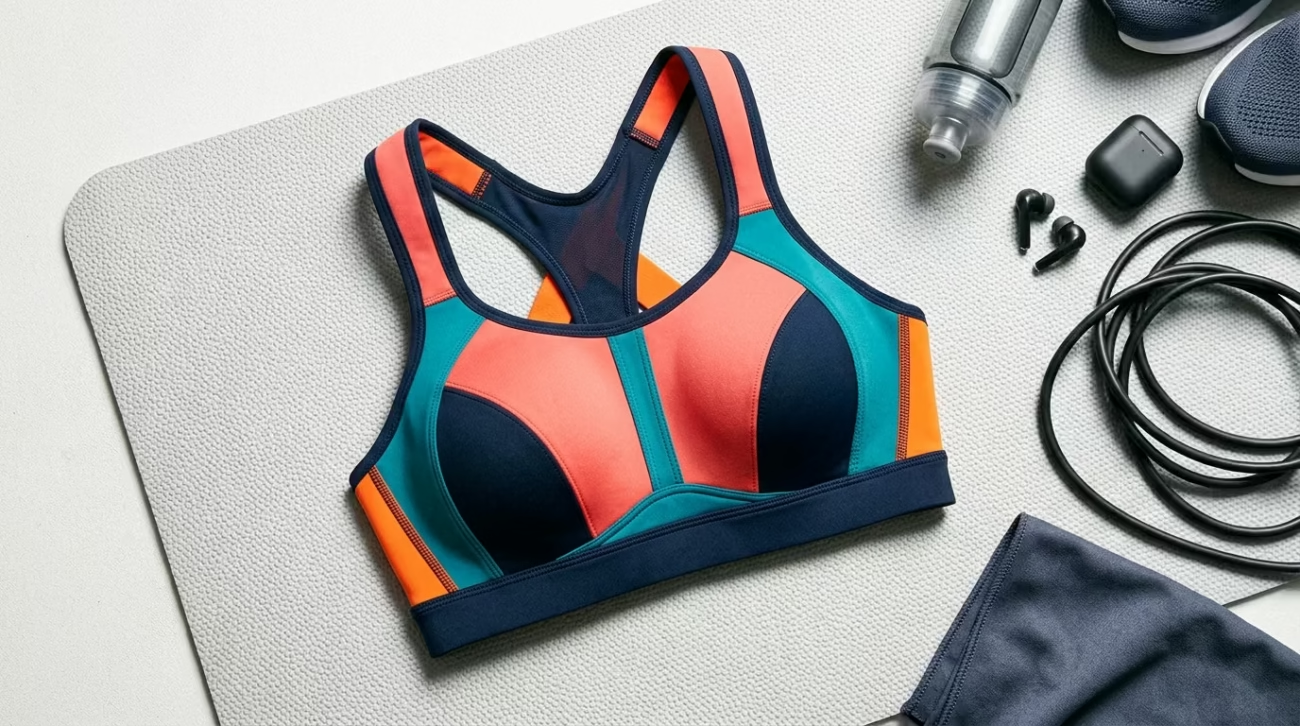

You have finally found your perfect bra — and your exact size is sold out. Or the brand you love starts and stops at a 36 band. Or your favourite bra’s band has stretched after a year of wear and suddenly feels loose. Sister sizes are the fitting trick that solves all three problems: they are neighbouring sizes that hold the same cup volume on a different band.
This guide explains what sister sizes actually are, how the band-and-cup maths works, and exactly when to reach for one. One caution first: if your band feels loose only in bras you have worn for a year, that is elastic wear, not a size change — our guide on how often to replace your bra explains how to tell the difference.
What Sister Sizes Actually Are
Bra sizes combine a band number (the underbust measurement, e.g. 34) with a cup letter (the difference between bust and underbust, e.g. C). Sister sizes keep the cup volume roughly constant while changing the band. The rule: go up one band size, go down one cup letter; go down one band size, go up one cup letter.
So a 34C, 32D and 36B all hold approximately the same cup volume. They are not identical — the cup shape and strap position differ — but they are close enough that one of them will usually fit comfortably.

The Sister Size Logic
Think of the band as the foundation. A bigger band needs a smaller cup letter to hold the same volume, because the band itself sits on a wider ribcage. A smaller band needs a bigger cup letter. The cup volume stays the goal; the band changes the frame:
- 34C → 32D (smaller band, bigger cup) or 36B (bigger band, smaller cup)
- 36B → 34C or 38A
- 32D → 30DD/E or 34C
- 38DD → 36E or 40D
Sister Size Chart (Common Sizes)
| If you wear | Sister sizes to try |
|---|---|
| 30B | 32A |
| 32A | 30B, 34AA/A |
| 32B | 30C, 34A |
| 32C | 30D, 34B |
| 34B | 32C, 36A |
| 34C | 32D, 36B |
| 36C | 34D, 38B |
| 36D | 34DD/E, 38C |
| 38DD | 36E, 40D |
| 40E | 38F, 42DD |

Is 34B the Same as 32C?
Almost — they hold similar cup volume on different bands. The 32C has a snugger band and slightly deeper cups; the 34B has a looser band and shallower cups. If your 34B band feels loose but the cups fit, the 32C is your better match. If the 34B band fits but the cups spill, the 36B (same cups, bigger band) is not the fix — you need 34C.
When to Use a Sister Size
Sister sizes are perfect in four situations:
- Sold out: your size is unavailable, so try the neighbouring sister size in the same style.
- Between sizes: you measure between two band sizes — in the GCC, many women sit between bands and do well sizing up for a relaxed fit in summer heat.
- Brand differences: brands cut bands and cups differently; a sister size absorbs that variation. Compare against an international size chart when shopping from UAE or KSA stores.
- Body changes: weight fluctuation, hormonal changes and postpartum shifts often move you one sister size up or down without a full re-fit.
When NOT to Use a Sister Size
Do not use a sister size to fix a worn-out bra — a stretched band needs replacement, not a bigger size. Do not go more than one sister size away; two steps changes the cup shape too much. And never size up the band just to make the cups feel bigger — that is the most common fitting mistake and the reason so many women wear bands that ride up.

How to Find Your Sister Size in 30 Seconds
Measure your snug underbust to get your band. Measure over the fullest part of your bust to get the cup difference. Then apply the rule: up one band, down one cup; down one band, up one cup. Write down your two nearest sister sizes and keep them in your phone — they will save every online shopping trip when your size is out of stock.
Sister Sizes in Practice: Real Scenarios
Picture three common moments. First, the sold-out problem: your 34C is gone, but the 36B and 32D are in stock — either sister size will fit your cup volume, so pick based on how your current band feels. Second, the brand switch: you move from a brand with stretchy bands to one with firmer bands, and your usual size feels tight — drop to the sister size with the smaller band and larger cup. Third, the weight change: after a few kilos, your old band rides up in every bra — that is the signal to move up a band size (down a cup letter) or remeasure entirely, not to just tighten hooks.
Sister Sizes and Body Changes Over Time
Hormonal cycles, pregnancy, breastfeeding and menopause can all shift your bra size by a band, a cup, or both — sometimes within months. Keeping your sister sizes noted means these transitions are easy: if your band suddenly feels loose everywhere, try the smaller-band sister size; if cups spill, try the larger-cup one. Re-measure after any major change rather than guessing, and remember that a well-fitting bra in the right sister size still needs to pass the full fit check — band level, cups contained, gore flat.
Sister Sizes for Panties and Nightwear Too
The sister-size idea applies beyond bras. Panty sizing often runs XS–3XL against hip measurements in cm; if you sit between two sizes, the larger size is usually more comfortable because elastic should never dig. Nightwear is deliberately relaxed, so if your bust/waist/hip measurements span two letter sizes, size up. The principle is identical to bras: match the garment to your actual measurements, use the neighbouring size when your exact one is unavailable, and let comfort — not the label — make the final call.
Common Sister-Size Myths Debunked
Myth one: “Sister sizes are the same size.” They hold similar cup volume but fit differently — a 32D and 34C share volume but sit on different bands. Myth two: “You should always size up for comfort.” Only in the band if it is genuinely tight; a loose band rides up and causes more problems. Myth three: “If the cups fit, the band does not matter.” The band provides most of the support — cup fit without band fit is an illusion of fit. These myths come from decades of inconsistent sizing marketing; the measurement-based approach, supported by fit research such as McGhee & Steele’s work on correct bra fit, is what actually works.
Sister Sizes Across International Brands
Brands cut differently: European brands often run firmer bands, US brands looser, and Asian brands smaller overall. This is why your size can shift when you shop across labels sold in UAE and KSA stores. Sister sizes absorb those differences — when a brand runs firm, go up a band and down a cup; when it runs loose, go down a band and up a cup. Keep your measured band and cup, plus both sister sizes, and check each brand’s own chart before ordering. Correct-fit research consistently shows measurement beats guessing across brands (McGhee & Steele on correct bra fit), so treat sister sizes as your bridge between measurement and any specific brand’s cut.
For the full measurement method, UAE size conversions and a printable-style chart, see our UAE intimate wear size chart.
Frequently Asked Questions
What are sister sizes in bras?
Neighbouring bra sizes with approximately equal cup volume: go up one band size and down one cup letter, or down one band and up one cup. Example: 34C ≈ 32D ≈ 36B.
Is 34B the same as 32C?
They hold similar cup volume, but the 32C has a snugger band and deeper cups. Choose based on your band fit: loose band → 32C; snug band but small cups → 34C.
What is the sister size of 36C?
34D (smaller band, bigger cup) and 38B (bigger band, smaller cup).
How do I calculate my sister size?
Measure underbust for the band and overbust for the cup, then move one step in the opposite direction on the other component: +1 band = −1 cup letter, and vice versa.
Should I size up or down in sister sizes?
Size down the band (up the cup) if your band rides up or feels loose. Size up the band (down the cup) if the band digs in or the straps are tight. Let the band fit drive the decision.
Can I wear sister sizes from different brands?
Yes — sister sizing is the best way to absorb brand-to-brand differences. Always check that brand’s own chart first, then use your sister size as the fallback.
Do sister sizes work for plus-size bras?
Yes, the same rule applies in extended sizing (38DD ↔ 40D ↔ 36E). Just stay within one step, and prioritise the band fit.
Why does my bra feel different in a sister size?
Because the cup shape, strap position and band width all change slightly. Try the sister size on and run the fit check — band level, cups full, gore flat — before deciding.
Conclusion
Sister sizes are the simplest trick in bra fitting: same cup volume, different band. Write down your size plus its two neighbours, use them when your size is sold out or when brands cut differently, and always let the band fit make the final call.
With your sister sizes saved, shopping online in the UAE or Saudi Arabia becomes much easier — even when the perfect size is out of stock.